When to use this tool
- A keepsake with a character you have played for years
- A pairing for a fan post or a profile picture
- A surprise picture for a friend who mains that character
- A concept frame for a cosplay, mod or fan project
AI duo portrait
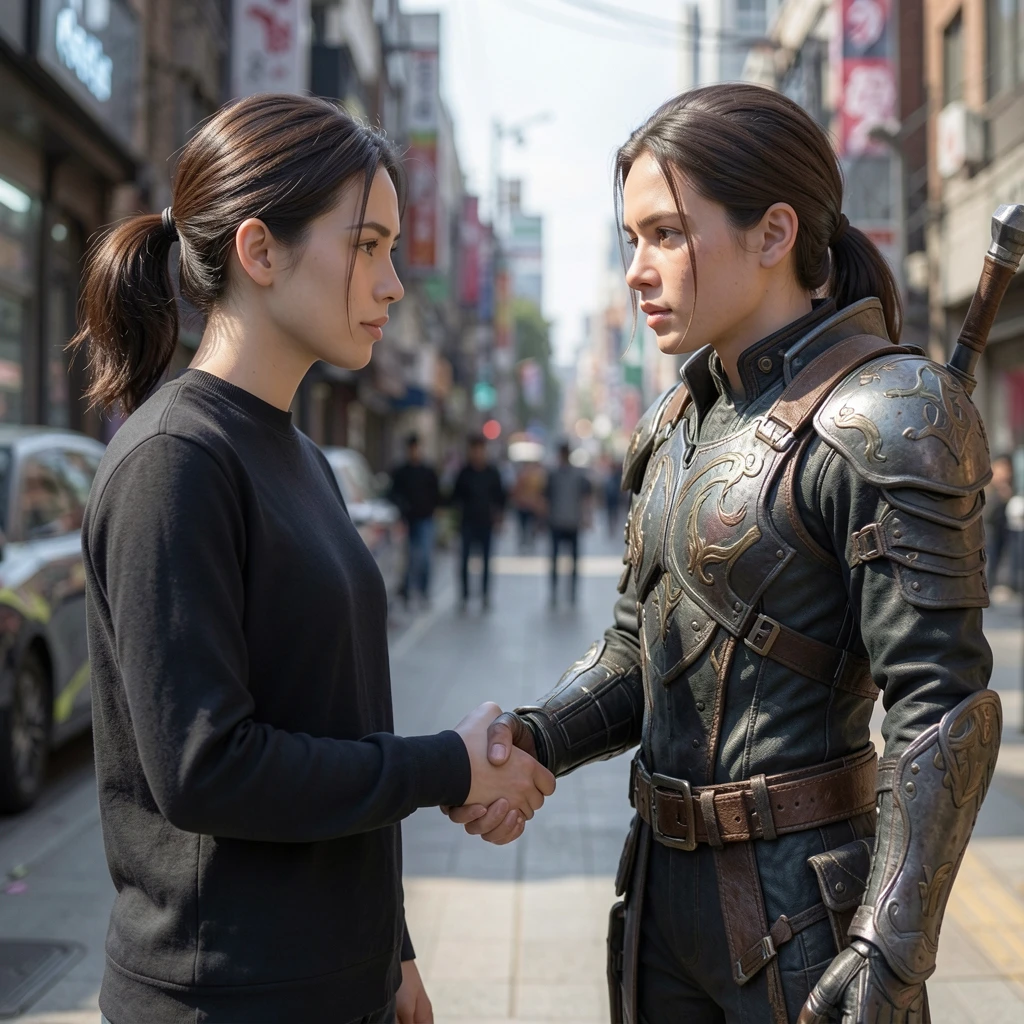
Two photos in, one picture out: you and the character, standing in the same place, in the pose you pick. It is the picture you would take if the game let you two meet — and it starts from the two stills you already have, not from a prompt you have to write.
DLSS5NVIDIA is an independent browser-based DLSS 5-style effect converter, online visual enhancer and AI image generator for creating visual references from uploaded game frames and character images. It keeps structure, pose and identity as reviewable constraints while changing style, lighting and materials, and also offers separate upscale and restoration workflows. It is not an official NVIDIA DLSS runtime.
Upload your two photos →Try free example →
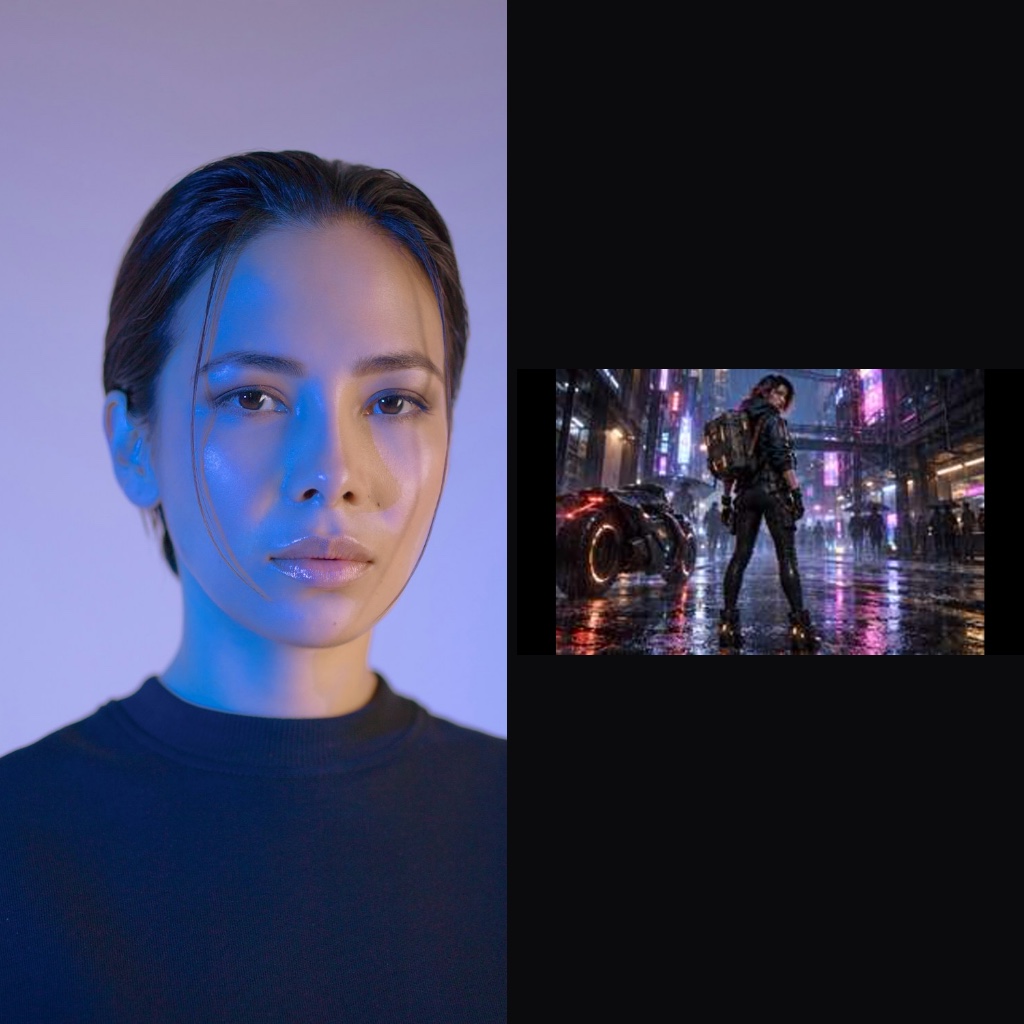
Two images required · you first, the character second · 15–30 seconds · square, portrait or landscape · 1 credit per run
The reference example runs without an account; your own upload requires sign-in.
 Free reference case
A Photo With Your Game Character is a browser-based two-reference portrait composition workflow for people who already have a source image and need a controlled visual change. It uses a task-specific instruction rather than a blank prompt, so the requested output starts from the existing composition, subject or material. The page's before-and-after example is an illustrative reference; the result from your own file depends on its resolution, lighting, crop and visible detail.
The workflow has three decisions. First, choose the largest original file instead of a screenshot or a second-generation social download. Next, confirm what is allowed to change and what must remain anchored: the task prompt is written for two-reference portrait composition, while the page shows the applicable input and output limits before submission. Finally, compare the source and result at 100 percent and download only after the information-sensitive areas pass your review. This order matters because a plausible AI result can look polished while still changing a face, label, edge or background.
Use a clear JPG, PNG or WebP with enough pixels for the details you care about. For this page, the published intake note is: Two images required · you first, the character second · 15–30 seconds · square, portrait or landscape · 1 credit per run. A clean input gives the model stronger evidence about edges, colour and texture. If the source is already heavily compressed, crop it tightly or find the original before spending a credit. Keep the source file beside the output; the service is an enhancement estimate, not a reversible edit history.
This workflow is a good fit for A keepsake with a character you have played for years, A pairing for a fan post or a profile picture, A surprise picture for a friend who mains that character, A concept frame for a cosplay, mod or fan project. It is especially useful when the subject is already recognizable and the job is to put a face into it while preserving the scene's main structure. It is less useful when the source has no recoverable detail, when the requested change is an exact measurement, or when the output will be used as an official record. In those cases, use the original capture, a design or editing application, or the receiving authority's own specification.
Use a photo of yourself where your face is clear and evenly lit, and a character still where the character is as large and as unobstructed as you can find. The run copies what each reference shows: a full-body, back-turned game still gives the model the outfit and the hair but almost nothing about the face, and it will design the rest. This is a generative composite, not a screenshot from a game: it is not an official feature of any title, of NVIDIA DLSS 5, or of the studios that made the character. Faces, hands, small props and scale can differ from both references, and only one pose is generated per run. The service cannot guarantee that a small character, logo, number, face or repeated pattern will remain unchanged. A larger output also does not create new factual evidence; it creates a more usable visual estimate.
Your allowance and the task cost are shown before a signed-in job starts. The public example is available for comparison, while processing a personal file uses the displayed credit amount. A failed generation on our side is handled by the account workflow according to the billing policy. Check the output target and the source dimensions first so a task is not spent on a size you cannot use. For batch or API work, compare the per-image cost with storage, retries and your own review time.
Before publishing, compare the result with the original in a fixed order: overall composition, subject identity, long straight edges, small text or labels, repeated texture, colour and shadows. Zooming to 100 percent exposes halos and invented marks that a thumbnail hides. For portraits, check eyes, teeth, hairline and skin texture. For products or architecture, check logos, windows, perspective and material boundaries. For generated edits, check that the requested change is present without unrelated objects or background drift.
You upload two images: a photo of yourself and a still of the character. The studio sends both to the model with a fixed instruction that names which reference is which, so the face on the left comes from your photo and the design on the right comes from the character still. The pose is chosen from four presets rather than written by you.
The face usually carries over, but it is a generative result, not a cut-and-paste, and it is not guaranteed. Hair, expression, clothing and hands can drift, especially when the two reference photos have very different lighting or size. Review the picture before you post it, and run it again if a run misses.
Each pose is its own instruction, and the model composes the scene from scratch for the pose it was given. Asking for two poses in one picture produces a crowded, inconsistent frame, so the studio keeps it to one pose and one credit per picture.
Yes — the example at the top of this page runs the same workflow on our own pair of photos and shows you the actual output. Uploading your own photo requires an account and costs the credit shown before you submit.
No. It is an independent generative composite made with a general image model on our own channel. It is not endorsed by, connected to, or produced by NVIDIA, any game studio or any publisher, and the character remains their property.
Virtual Try-On · Portrait Retouch · Virtual Makeup