P0 · 6 min read · September 18, 2026
DLSS 5 News Roundup: What Changed in Neural Rendering This Month
A fact-checked September 2026 briefing on DLSS 5, DLSS 4.5, 3D-Guided Neural Rendering and the practical role of GPT-6 Astra in AI rendering workflows.
dlss 5 news · dlss 5 update · 3d-guided neural rendering · dlss 4.5
The short version
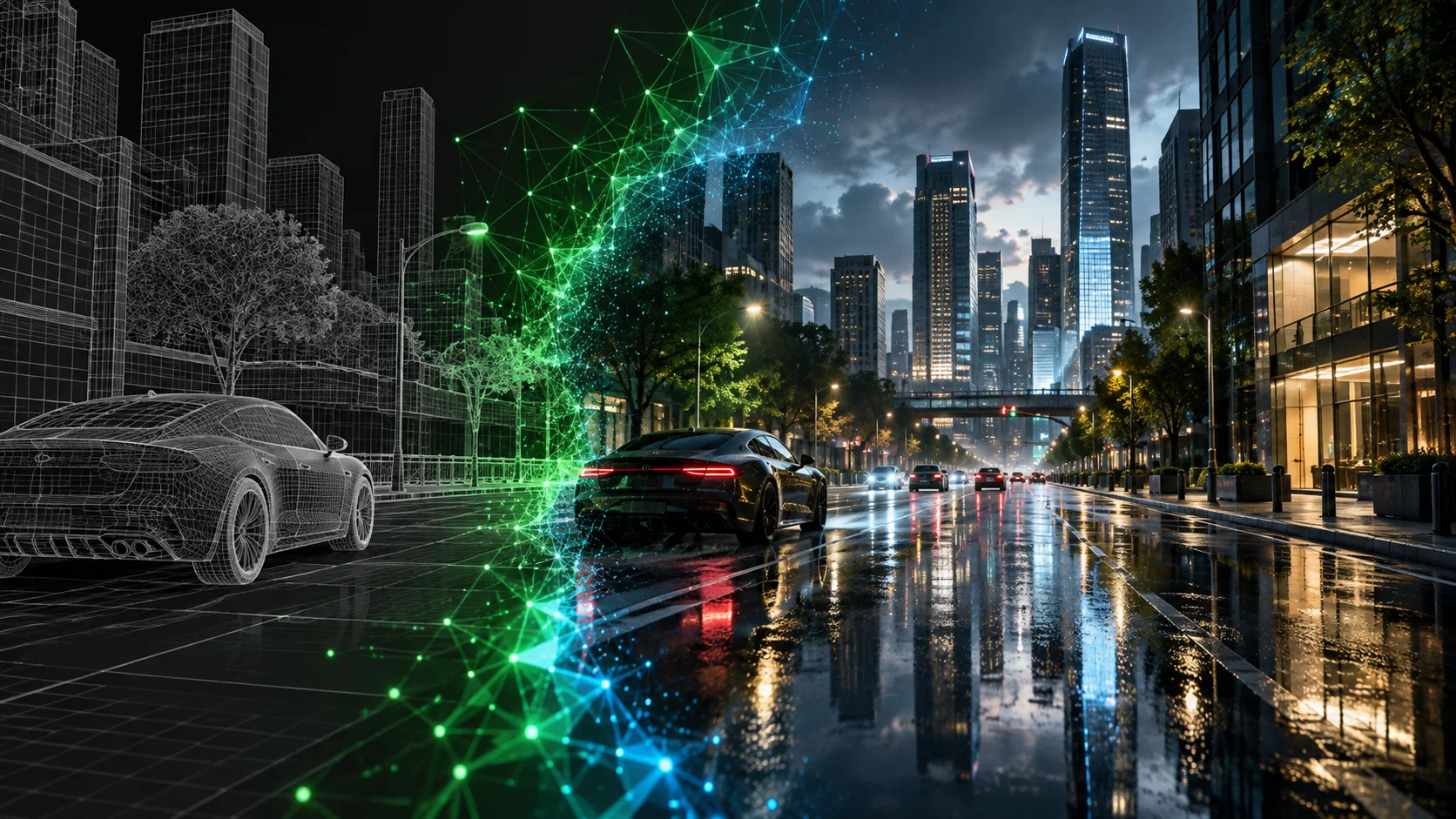
The meaningful DLSS story this month is a change in what the model is responsible for. DLSS 4.5 focuses on transformer-based reconstruction and frame generation. DLSS 5 moves further toward 3D-Guided Neural Rendering, where AI contributes to final lighting and material appearance while remaining tied to game scene data.
GPT-6 Astra is relevant to the workflow around these systems, not as a replacement for the renderer. OpenAI positions Astra as a general reasoning model available through the API; NVIDIA positions DLSS 5 as a local rendering stage for RTX 50 Series game pipelines.
1. DLSS 5 is now documented as generative rendering
NVIDIA's ADLR research page describes DLSS 5 as a real-time generative rendering stage that runs locally inside existing game pipelines on GeForce RTX 50 Series GPUs. The product announcement explains the grounding: color and motion vectors enter the model, and the output is anchored to source 3D content and kept consistent from frame to frame.
This is the key distinction from a text-to-image model. DLSS 5 remains a rendering-stage technology with a game engine as its source of truth. A generic image model may reinterpret an input unless the application adds its own constraints and checks.
2. DLSS 4.5 remains the practical performance layer
NVIDIA says the second-generation transformer model for Super Resolution is available to GeForce RTX owners through the NVIDIA app, while Dynamic Multi Frame Generation and 6X mode target RTX 50 Series GPUs. NVIDIA reports that 6X mode can generate five additional frames for each traditionally rendered frame, with the multiplier adapting to the display refresh target.
For a credible comparison, report rendered FPS, displayed FPS and end-to-end latency. A higher displayed frame count is not the same as lower input latency or a better native frame.
3. Where GPT-6 Astra fits
OpenAI's announcement lists GPT-6 Astra as gpt-6-astra in the API. In a rendering product, its useful jobs are: converting art direction into a constrained brief, mapping the brief to supported controls, generating tests for lighting and text, and reviewing frame samples for obvious regressions.
It should not invent motion vectors, replace the scene graph or claim that a visual result is pixel-identical. Those jobs belong to the renderer and deterministic validation.
4. What to watch next
The important questions are how developers expose masks, object categories, temporal constraints and user toggles—not simply how photorealistic a single screenshot looks. Any serious evaluation should include camera movement, thin geometry, transparent surfaces, hair, foliage, signage and UI.
A high-quality workflow should save the input frame, model and settings version, output frame and evaluation criteria. GPT-6 Astra can summarize the evidence, but the evidence should remain inspectable by a human.
Editorial standard
We prioritize NVIDIA and OpenAI primary sources, label proposed workflows as proposals, and avoid turning vendor claims into independent benchmark results. Claims, hardware support and model availability can change; this page is dated and will be reviewed monthly.
This site is independent and is not affiliated with or endorsed by NVIDIA Corporation or OpenAI.