P0 · 9 min read · 2026-10-23
A mood board for a DLSS 5-style game character: choose references with a job
A character style reference should explain a visual decision without quietly replacing the game character. Choose readable cues, relevant subject matter and a coherent direction; then separate the source identity from the lighting, materials or palette you want to borrow.
DLSS 5 · game character
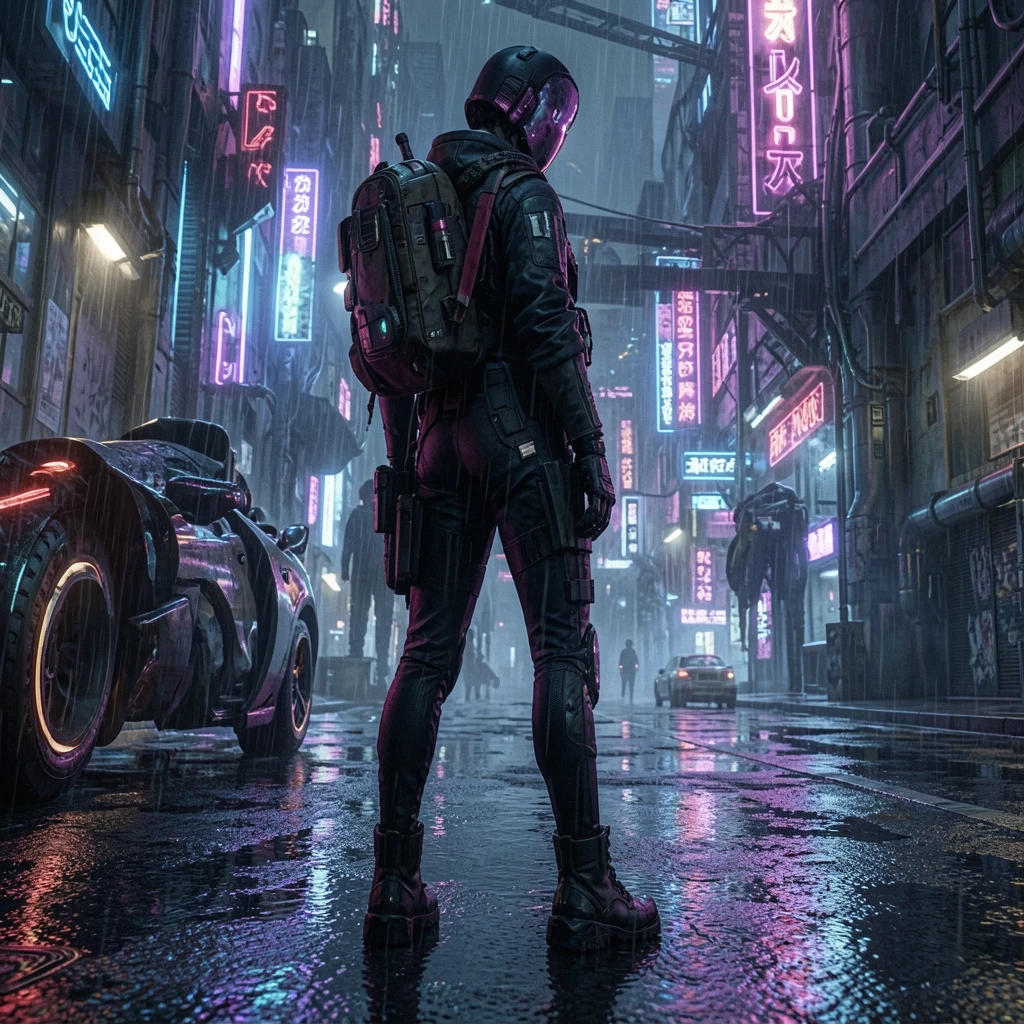
A character style reference should explain a visual decision without quietly replacing the game character. Choose readable cues, relevant subject matter and a coherent direction; then separate the source identity from the lighting, materials or palette you want to borrow.
TL;DR
- Start with the game character's identity and assignment, not a folder of attractive but unrelated pictures.
- Give each reference a specific job such as light, fabric or palette. A whole image can carry unwanted costume and pose suggestions as well.
- Mixing directions creates a brief that needs clarification; it does not establish a predictable blend or a tested reference-weight formula.
- The illustrated cyberpunk and anime examples are different historical site-owned characters. They demonstrate selection questions, not a same-character transformation or a new multi-image experiment.
The DLSS 5 connection and the limit of this board
NVIDIA's research overview describes DLSS 5 in a game-rendering context. Our reference-board discussion concerns an independent still-image workflow. It does not run NVIDIA's system, provide its artistic controls or test its treatment of a game character.
The shared creative question is how appearance can change while the authored subject remains meaningful. Here the subject is specifically a game character or game frame, not a room, product or portrait commission. The board helps a creator describe the intended direction before using the site's character workflow or handing the idea to another artist.
Studio belongs to the product and handover story, but a polished product interface does not make an unclear visual brief clear. If the board mixes incompatible expectations, a convincing result may still answer a different assignment. The first task is therefore to decide what each image is being asked to communicate.
Separate the identity source from the treatment references
The identity source tells a reviewer who the character is: head shape, hair, costume, posture and visible equipment. A treatment reference helps describe how that design might be lit or rendered. The distinction is a briefing practice, not a guarantee that an image model will use each input only for its assigned purpose.
A reference may contain a helmet even when you only want its reflected light. It may also show a face shape, body proportion or pose that conflicts with the source. Name these conflicts before choosing it. If the unwanted feature is central to why the image looks appealing, you may need a different reference rather than a longer list of exclusions.
Keep the original identity image available during review. A board can become visually persuasive enough that people stop checking the source. When that happens, the project may drift from restyling the character into designing a replacement without anyone explicitly deciding to do so.
Criterion one: the cue must be visible and describable
Choose a character style reference whose useful feature you can point to. If you want the relationship between wet cloth and reflected light, look for a picture that actually shows those surfaces. A dark thumbnail that merely suggests cinematic mood gives a reviewer little evidence about what treatment you intended.
Do not confuse visible detail with reliable factual detail. The reference can be a generated visual example, as ours is, but it should be labelled accordingly. You can discuss the appearance of a surface without claiming that it represents a physically measured material or that its costume construction is possible.
In this image, colored reflections and dark surfaces can be discussed separately from the helmet. That separation is a proposed reading of the reference. It is not a finding that the model can import only reflections while ignoring every other cue, and it is not a new test of how strongly the image controls a result.
Criterion two: the subject and viewpoint should help the assignment
A useful image makes the relevant character features available for comparison. A close face reference may help discuss facial light but say little about a full costume. A distant silhouette may help with broad staging but leave fabric treatment unresolved. Pick the view that helps the decision you actually need to make.
Consider also whether the reference's pose and body design will compete with your source. A dramatic turning pose can be compelling for reasons unrelated to color. If your assignment fixes a front-facing stance, using that reference requires a clear distinction between the pose you are not borrowing and the treatment you are discussing.
The anime example below shows a different character, costume and environment from the cyberpunk picture. It is not another result for the same protagonist. It provides a contrasting visual direction, useful for asking whether the board is about surface treatment or whether it has quietly changed the entire subject.

A board that includes both pictures should not imply a demonstrated transition between them. A reviewer can discuss their different color organization or surface treatment, but the images also differ in identity and composition. State those differences so that inspiration is not mistaken for comparative evidence.
Criterion three: the board must support a coherent request
Assign a role to every reference before keeping it. One may illustrate the palette, another a material treatment. If two pictures demand opposite approaches to the same feature, choose a direction or state which use is primary. An unexplained collision is not automatically a productive hybrid.
For example, a board might ask for grouped anime-like shadows while also asking for continuously detailed surface shading everywhere. Those can be competing aims for the same area of a character. The resulting interpretation is not something we measured here; the editorial problem is that the acceptance criteria are unclear before generation even begins.
Do not convert a board into a numerical mixture unless the actual tool provides a documented, tested control for that purpose. We have no basis here for assigning percentages to references or claiming that image order enforces a universal priority. If the current workflow cannot express the intended relationship, simplify the brief or use the board only for human art direction.
What the prompt can say, and what the image cannot promise
A prompt can name the subject, the desired treatment and the features to keep. A reference can show visual cues that are difficult to describe compactly. BFL's image-editing documentation explains editing with text and image inputs; it does not certify a fixed division of influence for the site's character tool.
Think of these inputs as ways to express an intention. Neither is proof that the intention has been obeyed. The sentence keep the same face needs a visible source and a later comparison; a reference containing another face cannot be assumed harmless merely because the prompt says to borrow only its light.
The current character workflow leads into the site's image editor with a character-oriented brief. This article does not introduce a new mood-board uploader, automatic reference selector or weighting interface. Use the controls that are actually available. The board can remain a human planning document even when only part of it can be expressed in one editing request.
How mixed art directions can change the review problem
A mixture may lead a reviewer to accept a new costume because it fits one reference, then accept a new face because it fits another. The final image can become internally appealing while no longer representing the intended game character. That is a risk in the review process, not a measured prediction of model behavior.
Separate three decisions: whether the character is retained, whether the requested treatment is visible, and whether the combination serves the game world. A failure in the first category should not vanish inside enthusiasm for the second. When the assignment permits redesign, record that permission explicitly rather than treating it as an accidental side effect of the board.
If you want a hybrid, describe the hybrid as its own proposal and decide what would make it acceptable. Do not call it a faithful example of either original direction without checking. A board can ask a creative question; it cannot supply an answer that no result has yet demonstrated.
A practical selection routine
- Put the identity source first and state the game-character use: concept discussion, costume review or a particular scene treatment.
- For each candidate reference, write the visual cue you want and the identity features you do not want to borrow.
- Remove images whose useful cue is too ambiguous to explain or whose scene does not help the assignment.
- Resolve competing treatment requests before making an editing attempt. Keep accepted compromises visible.
- Compare any actual result against the source and the stated cue, not just against the overall attractiveness of the board.
- Stop when the next reference adds no distinct decision or makes the acceptance criteria less clear.
These are proposed preparation steps. We did not submit a new reference-board task or compare alternative reference sets for this draft. There is no measured weighting rule, timing claim or success rate. The historical images illustrate how to ask selection questions, not how to guarantee a result.
Hand over a board that someone else can read
A collaborator should be able to distinguish source identity, treatment inspiration and rejected directions without guessing. Keep captions with the images and explain which visual decision each one supports. If a candidate fails identity but offers useful lighting, label that restricted use instead of presenting it as an approved character reference.
For the broader starting point, read the game-frame style-reference guide. The matching game-character style tool keeps the subject anchored to game characters and frames. A character style reference earns its place by making the brief more precise, not by adding another impressive picture.
Independence and provenance
We operate the linked site independently and are not affiliated with NVIDIA or Black Forest Labs. Both illustrations are authorized site-owned historical samples with source and hash records. They depict different characters; no fresh transformation, reference-strength test, game-runtime capture or hardware comparison was performed. Their role is to make reference selection inspectable while keeping the original character in charge of identity.
Try the free AI image tool · Check the source-linked GPU evidence