P1 · Practical guide · 2026-10-23
Character consistency after style conversion: will you still recognize them?
Character consistency starts with deciding what must survive a redraw. A convincing new atmosphere is not enough if the hairstyle, costume or face no longer identifies the character. Define those anchors before judging the new style.
style conversion · neural redraw
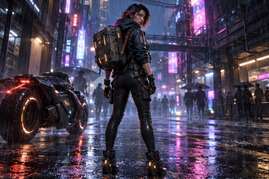
Character consistency starts with deciding what must survive a redraw. A convincing new atmosphere is not enough if the hairstyle, costume or face no longer identifies the character. Define those anchors before judging the new style.
TL;DR
- Separate the features that identify the character from the lighting and surface treatment you want to change.
- Inspect silhouette, hair, garment construction and facial proportions independently; a pleasing overall scene can conceal a failed identity check.
- Our site-owned historical pair retains a neon-street theme but replaces visible hair with a helmet. It is a useful failure example, not proof of reliable identity preservation.
- The checklist below is an inspection method, not a newly measured model benchmark or a promise that a prompt will lock identity.
A new treatment, still the same person?
DLSS 5-style conversion is the creative task here: turning a character image into a different visual reference. The question is whether that reference still belongs in the same character brief. Studio provides a product and handover context for this work; the creative result still needs a person to decide what can be used.
A dark jacket, a motorcycle and a wet street can make two pictures feel related. Those shared elements do not establish that the protagonist is unchanged. If a reader recognizes the genre but cannot recognize the person, the scene may work as atmosphere exploration while failing a character-specific assignment.
Begin with the intended use. A mood board can tolerate changes that a costume continuity sheet cannot. A visual direction for a new character has different requirements from an approved character being placed in another setting. Write the use down before selecting a result, so an attractive image does not quietly redefine the assignment.
Write the invariants before changing the style
Treat an invariant as a feature that would make you reject the result if it changed. Avoid a long list of vague adjectives such as iconic, accurate or faithful. Describe things that a second reviewer could point to in the source, including uncertainty where the source does not show enough detail.
- Silhouette: the outline of the head, shoulders, torso, coat and lower body, including which features extend beyond the main shape.
- Hair: whether it is exposed, its broad length and shape, its parting when visible, and which side overlaps the face.
- Clothing: the collar, front opening, sleeves, fastening direction, panel divisions and the attachment of bags or straps.
- Face: visible spacing and relationships between eyes, nose, mouth and jaw, without inventing features hidden by the viewing angle.
- Allowed changes: light direction, palette, surface finish and atmosphere, each named separately from the protected features.
This is a proposed checklist for a reader's own work, not a statement that we submitted each instruction to the model. An instruction can express your intention without enforcing it. Keep that distinction visible when handing a brief to someone who may otherwise assume that every written constraint has already been satisfied.
What the site-owned sample shows
The source below comes from the site's synthetic character example. It shows a standing figure turning back toward the viewer, with visible dark hair, dark clothing, a bag and a vehicle to the left. The small source does not give enough information for a detailed account of the face. We leave those details unresolved.
The stored result has a stronger, more detailed presentation of the street and figure, but the head is now helmeted. Visible hair is no longer available as an identity anchor. The backpack, clothing surfaces and framing also need separate review; shared colors and subject matter cannot settle whether those changes are acceptable.
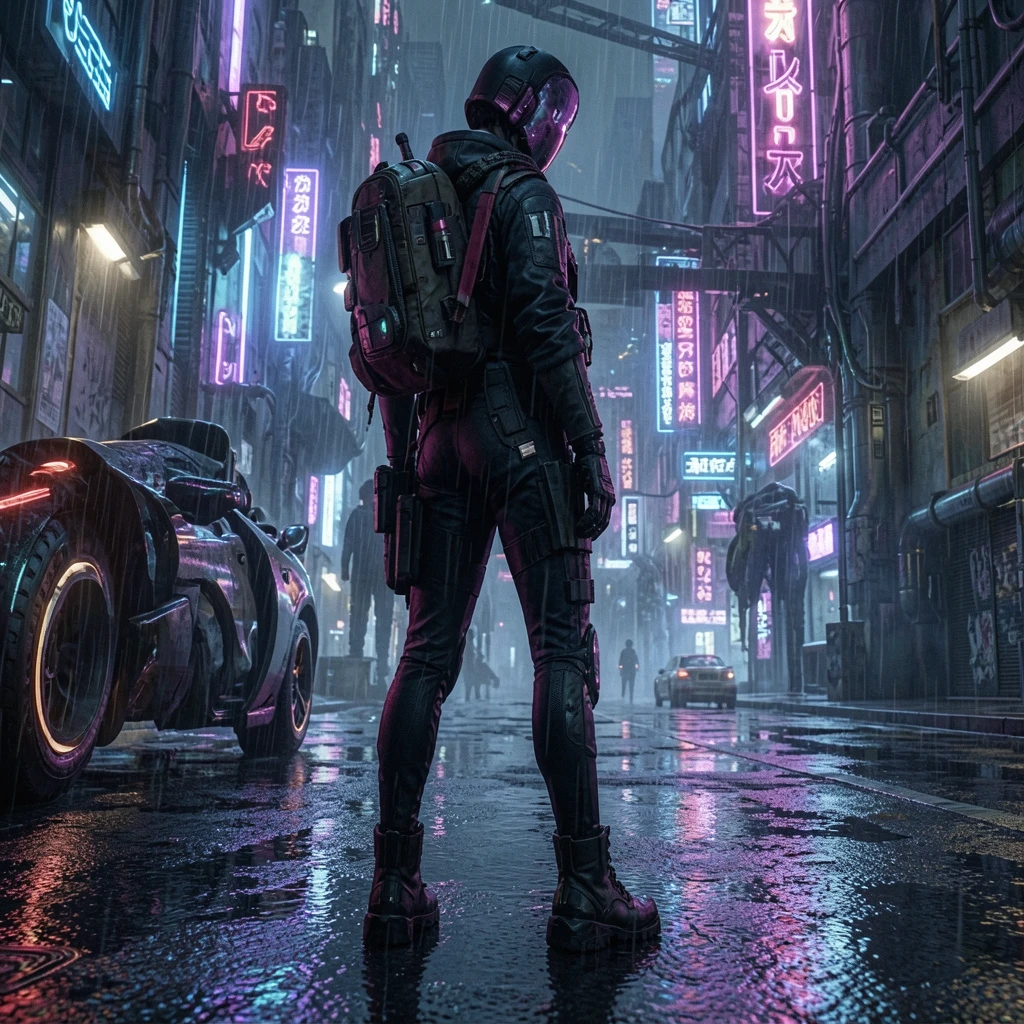
Our observation is deliberately narrow. This pair fails a brief that requires exposed hair to remain exposed. It does not tell us how often other images fail, which model setting caused this change, or whether a different instruction would fix it. We did not run an identity comparison study, and no success rate follows from this example.
Which features deserve the closest inspection?
Hair and headwear are immediate priorities in this pair because there is a visible replacement. That is an observation about these images, not a universal ranking of model weaknesses. For another source, an unusual coat outline or an exposed face might be the more important identity anchor.
For silhouette, look at the outer contour before studying texture. Check whether the shoulder width, coat length and stance still communicate the same design. A change in crop or camera angle can also change the apparent proportions, so distinguish a framing mismatch from a redesigned body rather than treating every difference as the same failure.
For hair, do not accept matching darkness as matching design. A dark helmet and dark hair can occupy a similar region while describing different characters. When hair is partly hidden, compare only what is visible. If the image cannot show the parting or shape, mark that item unresolved instead of filling it in from expectation.
For clothing construction, follow the garment edges. A convincing leather texture is not a substitute for the same collar, fastening and seams. Trace how a strap meets a bag and where a sleeve joins the torso. These checks are useful because costume identity lives in relationships between pieces, not simply in the material name.
For facial proportions, start by asking whether the source and result actually offer comparable views. If one face is obscured, the correct verdict is unknown. If both are visible, compare the broad arrangement and expression before fine detail. This article provides no facial recognition score and no assurance of biometric identity preservation.
A comparison procedure you can repeat visually
The following steps describe a suggested review of existing images. They do not specify generation parameters, elapsed time or output dimensions, and they are not presented as an experiment performed for this draft.
- Open the untouched source beside the candidate result. Keep the original available throughout the review.
- Read the invariant list without looking at the result first. Confirm that each item refers to something visible in the source.
- Compare the overall framing and silhouette, then inspect the head, garment construction and any visible face in that order.
- Mark each protected feature as retained, changed or unresolved. Write a short visual reason rather than a general quality score.
- Judge the proposed style separately: does the palette, light and material treatment serve the brief?
- Choose an appropriate use for the result, or reject it. Do not turn an unresolved identity check into approval just because the atmosphere is effective.
For this particular historical pair, exposed hair belongs in the changed category. Fine facial proportions belong in unresolved because the views do not provide a fair comparison. The neon setting may remain useful as a stylistic reference, but that does not reverse the hair verdict. The categories keep a partial success from being mistaken for complete fidelity.
Reference images and instructions are not identity locks
BFL's image-editing documentation describes editing with text and reference images. Its multi-reference explanation includes character consistency among the uses of reference-based editing. Those are descriptions of an editing approach, not a guarantee for our stored sample or a certification of our site.
A text instruction can name the features you want to keep. A reference can show what those features look like. Neither source establishes an absolute conflict rule for this site's workflow. Do not assume that adding the word identical overrides a helmet, a different viewpoint or a competing costume cue in a reference.
If the first result fails, narrow the creative brief before making another attempt: identify the actual identity failure and remove contradictory requests. That is a planning recommendation. We have not tested a particular repair instruction here, so we cannot claim that this change will recover the original face or costume.
What to hand over with a candidate
For a character-specific use, hand over the source, the proposed visual direction and the unresolved features together. A collaborator should not have to infer whether a new helmet was requested or accidental. If the candidate is accepted only for lighting, label that limited use clearly and do not promote it to an approved character design.
A practical note for this sample would say that the street treatment can inform atmosphere, while the head treatment fails the exposed-hair requirement. That note is less glamorous than declaring consistency achieved, but it gives an illustrator or reviewer something concrete to accept or reject. It also leaves the original design in charge of identity.
For the wider workflow, read the existing game-frame style-reference walkthrough, then open the character style-conversion tool to inspect the site's example and its boundaries. The useful outcome is a reviewable visual reference, not an unqualified promise to keep every feature.
Independence and limits
We operate the linked site as an independent project and are not affiliated with NVIDIA or Black Forest Labs. DLSS 5-style here describes the site's visual-conversion positioning; this article does not demonstrate an official game runtime, hardware measurement or manufacturer-endorsed result.
The illustrations are existing site-owned samples reviewed for this draft. No fresh generation, comparative performance test or parameter study was performed. Character consistency must be checked against the particular source and brief; when the evidence cannot support a judgment, the answer remains unresolved.
Try the free AI image tool · Check the source-linked GPU evidence