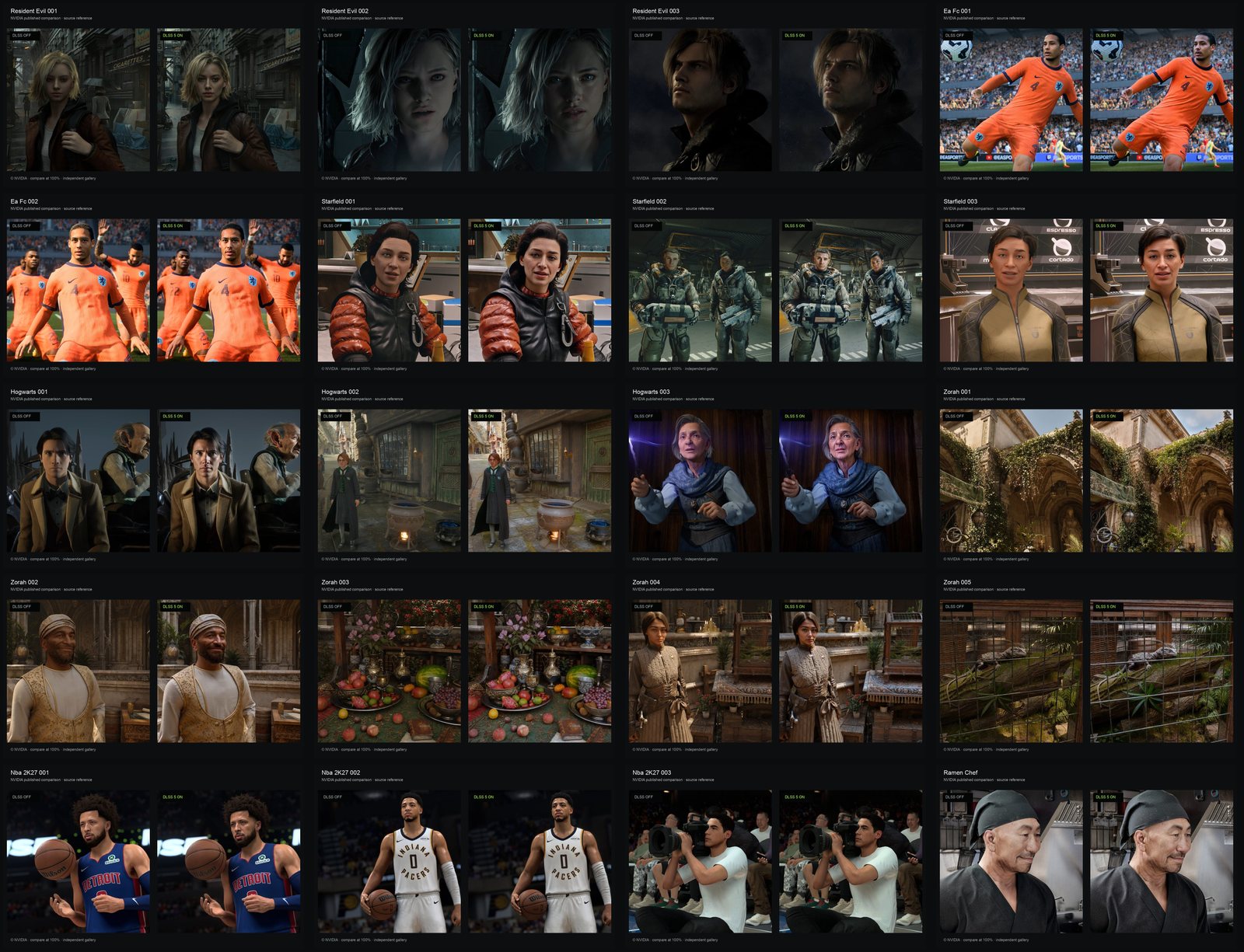
20 source-linked reference pairs
Keep the NVIDIA source link beside every pair and inspect faces, hair, thin geometry, materials and shadows at 100%.
Open the source-led gallery →DLSS 5 is an in-game neural rendering technology. GPT Image, ChatGPT Images, Midjourney and FLUX create or edit images. This guide compares their jobs instead of treating them as interchangeable products, then gives you a real sample and a checklist to run yourself.
Try before you choose
The examples are cached so you can see the workflow before signing in. Use the character sample for style conversion, the enhancer sample for existing images, or open the source-led gallery when you want to audit published references.
Try character conversion → Try visual enhancer → Open 20-pair gallery →
Choose by task
| Tool | Primary role | Best for | Typical workflow |
|---|---|---|---|
| DLSS 5 (official technology) | Game neural rendering | RTX 50 series games | Game frames, lighting and materials |
| GPT Image 2 | Image generation and editing | Complex prompts and edits | API and ChatGPT workflows |
| ChatGPT Images 2.5 | Conversational image creation | Iterative revisions | Natural-language editing |
| Midjourney | Creative image generation | Concept art and style | Visual exploration |
| FLUX | Hosted image generation | Developer pipelines | Custom workflows |
| Browser AI upscaler | Image enhancement | Existing photos and renders | Fast enlargement without a GPU |
Hardware context
The table explains each workflow. For model-level DLSS 5 status, VRAM and source links, continue to the independent GPU evidence checker.
Check GPU evidence by model →Evidence, not a leaderboard
A useful comparison lets a reader see the source, run a related task and understand the boundary of the result. These are independent references, not a claim that one model wins every prompt.
Keep the NVIDIA source link beside every pair and inspect faces, hair, thin geometry, materials and shadows at 100%.
Open the source-led gallery →
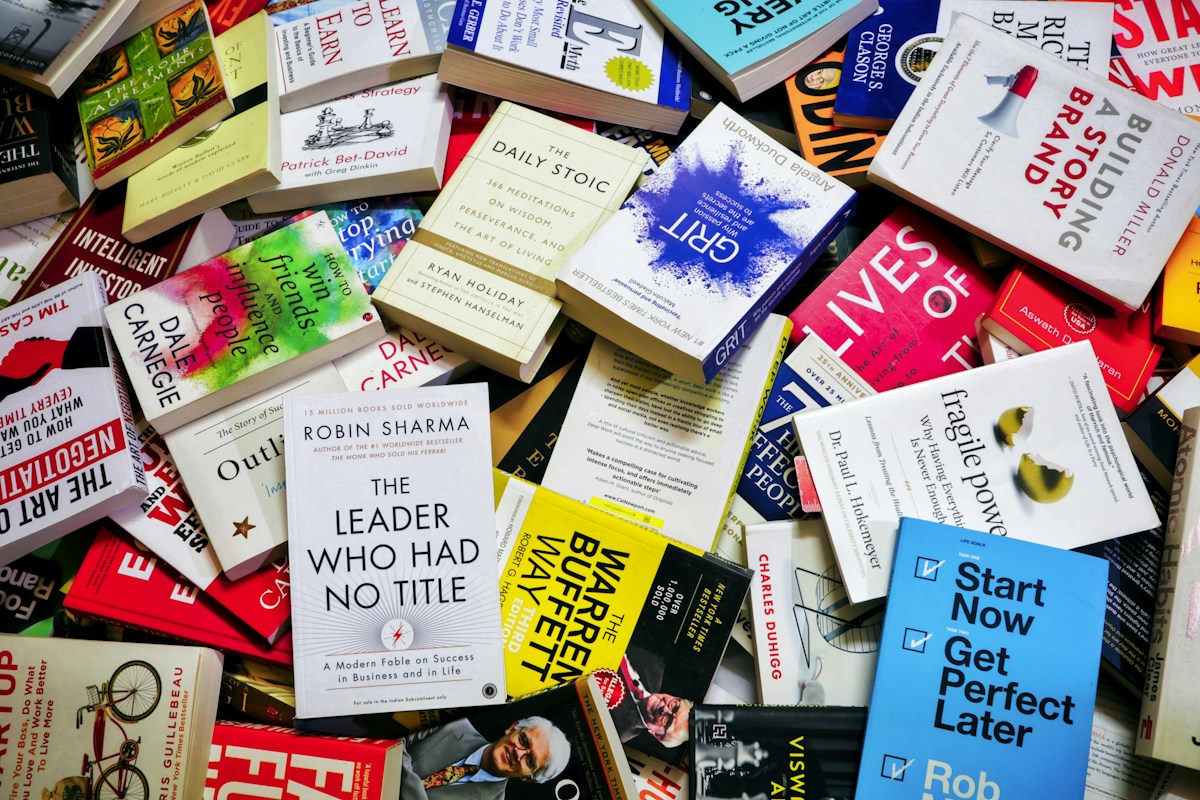
Use the same before-and-after checks for product labels, faces and straight edges before deciding whether an enhancement is useful.
Open the free enhancer →
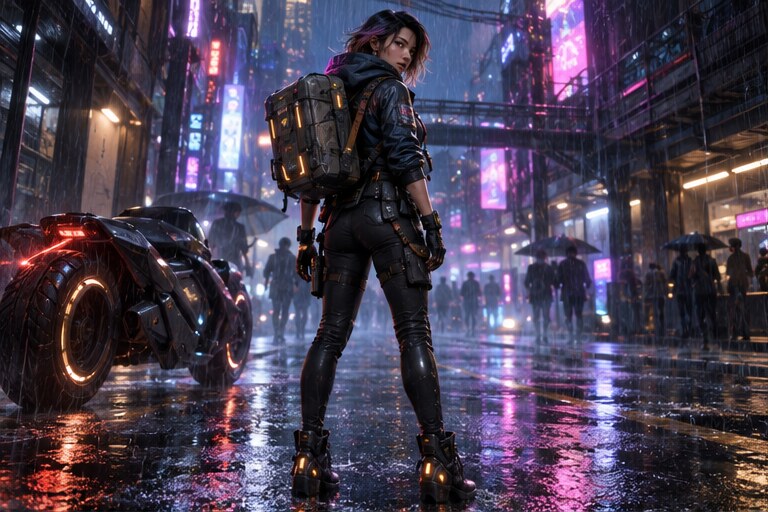
The independent workflow changes style, lighting and material direction while keeping the original frame available for review.
See the character cases →Repeatable review
Does the output keep the pose, silhouette, perspective and repeated geometry?
Do faces, hands, logos and product labels stay recognisable against the source?
Are edges and materials clearer, or has the model invented plausible detail?
Can a visitor run a comparable input, inspect the result and keep the original?
The local DLSS5 Studio workflow processed one 3-second, 720p public-domain clip as 36 frames in 87.4 seconds on an RTX 4090 reference machine — about 2.43 seconds per frame. That is a batch-workflow observation, not a real-time promise or a cross-provider benchmark.
Read the full Studio evidence →No. Official DLSS is an in-game neural-rendering technology. Image generators create or edit images from prompts, while the independent browser workflow on this site converts a supplied frame or reference into a reviewable visual direction.
Keep the source image, aspect ratio, target direction and review checks fixed. Compare structure, identity, texture and workflow separately instead of judging two unrelated prompts from different models.
No. The gallery combines publicly published NVIDIA reference pairs with independent browser examples. A local Studio run is reported as one measured snapshot, not a universal speed or quality claim.
Yes. The character conversion and visual-enhancer examples use cached sample runs. You can inspect the before-and-after result first, then sign in when you want to upload your own image.
DLSS and NVIDIA are trademarks of NVIDIA Corporation. This site is independent and non-official. Public NVIDIA reference images remain the property of their respective owners; the browser examples are independent references.