P1 · Practical guide · 2026-10-23
Choose an interior style reference that says what you actually want
A useful interior style reference makes the desired treatment easy to identify. Choose it for readable materials, a compatible scene and a clear purpose, then state which parts are inspiration and which parts of your own room must remain.
style conversion · neural redraw
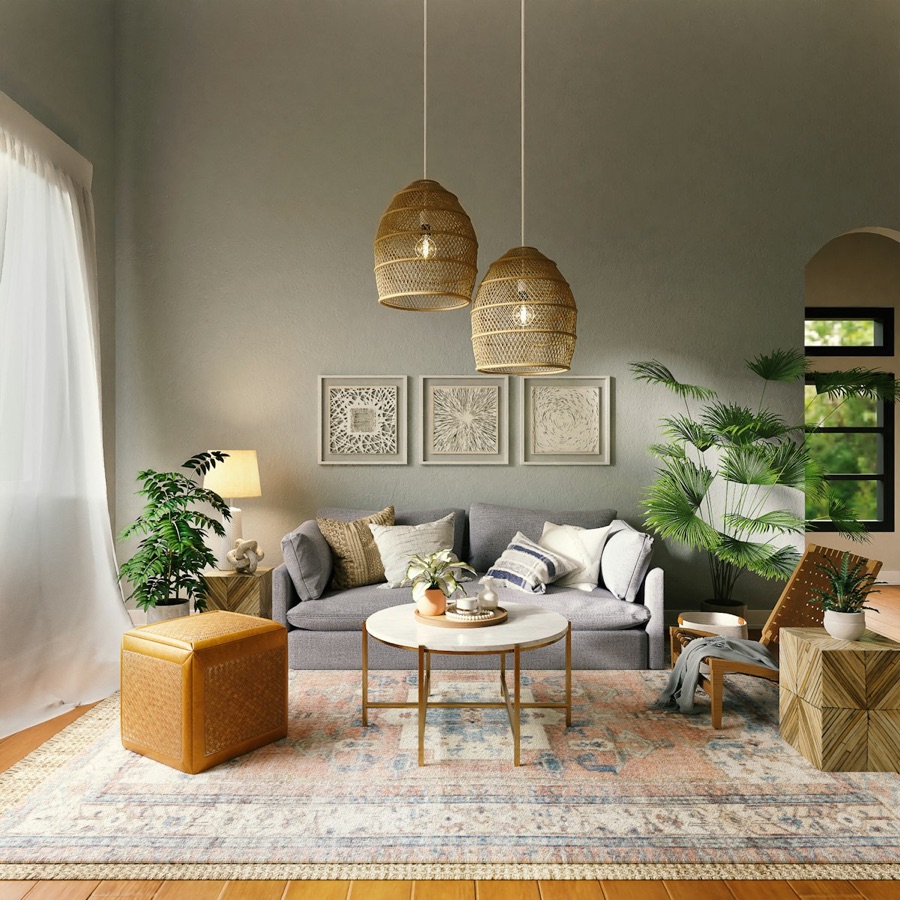
A useful interior style reference makes the desired treatment easy to identify. Choose it for readable materials, a compatible scene and a clear purpose, then state which parts are inspiration and which parts of your own room must remain.
TL;DR
- Give the source room and the style reference different roles before asking for a redraw.
- Select a reference whose desired material and lighting cues are visible, whose scene is relevant, and whose borrowed features you can describe plainly.
- Text states an intention; an image shows visual cues. Neither is an absolute control that guarantees the other will be ignored when they conflict.
- Our historical room example transfers recognizable visual ideas while changing architecture. It is not a new test of reference strength or prompt priority.
Pick a reference for a decision, not a collection
A saved room image can be attractive for reasons that have little to do with your project. Perhaps the appealing feature is its large window, its unusually high ceiling or the amount of empty floor around the furniture. If those features are unavailable in your actual room, using the image without a clear brief can confuse inspiration with a different building.
The purpose of this workflow is style conversion: taking an existing room toward another visual direction. It belongs to the project's core creative line, with Studio part of the product and handover story. Choosing the reference is therefore a design decision about what should change, not a search for a technically cleaner photograph.
Before collecting alternatives, finish the sentence: I want this image to help me decide about ____. A useful answer might be the relationship between woven lighting and neutral upholstery. A less useful answer is everything, because it gives a reviewer no way to distinguish an intended borrowing from an unwanted structural change.
Source, reference and text have different jobs
The source is the room you are trying to reinterpret. Its visible walls, doors, windows and viewpoint give you something to compare against after the redraw. It is not automatically a measured plan, and details outside the frame remain unknown. Keep it available even when the new concept feels more persuasive.
The interior style reference supplies visual examples of the treatment you want to discuss. It might help describe a palette, a fabric, a relationship between furniture shapes or the way light reads across a surface. That intended role does not guarantee that only those properties will influence the output.
Text gives names and boundaries to the request. On the site's room workflow, named style and room-type choices supply structured direction, with an optional extra instruction. This is not an assertion that the interface offers an unrestricted prompt editor or a tested reference-weight control. Describe the actual controls rather than importing features from another image tool.
BFL's image-editing guide documents text and image inputs for editing. Its multi-reference guide explains combining information from references. These sources support the general distinction between verbal instructions and visual inputs; they do not establish a fixed priority order for the site's specific room workflow.
Criterion one: can you actually read the desired treatment?
Open a candidate reference and point to the material or lighting relationship you want to borrow. If the furniture is hidden in shadow, the fabric is obscured or the appealing color comes mostly from an extreme filter, it may be difficult to state what the image is showing. That is a reason to find a clearer reference, not a reason to invent its missing details.
Image quality matters here as evidence. A visible surface gives the reviewer something to compare; an ambiguous patch does not. We have not measured a minimum resolution or a quality threshold, and we are not claiming that a larger file automatically produces a better result. Choose for legibility of the relevant cue, not for a number attached to the file.
The site-owned reference below makes its woven pendant shades, sofa, pale textiles, wood surfaces and plants visible. Those are concrete candidates for discussion. The image also contains architectural features, so choosing it requires saying whether those features are part of the request or merely part of the photograph.
Criterion two: does the scene help with your actual room?
Look at the room type, the camera view and the relationship between large objects. A living-room scene may help discuss seating and lighting for another living room, but a close view of a tabletop cannot show how a whole seating area relates to the walls. A beautiful image can be an excellent material reference and a poor layout reference at the same time.
The reference's composition may introduce competing cues. A dominant arch, large window or centered sofa can become visually inseparable from the mood you like. This is a risk to inspect, not a measured rule about which cue the model will copy. Choose a reference with fewer irrelevant demands when you can, and explicitly label any mismatch you decide to keep.
Our source room below has a different arrangement from the furnished reference. Its rear door and adjacent dark opening establish a structural problem that a palette description cannot solve. The point of showing the source is to keep the real room visible while deciding which ideas from the reference are appropriate.
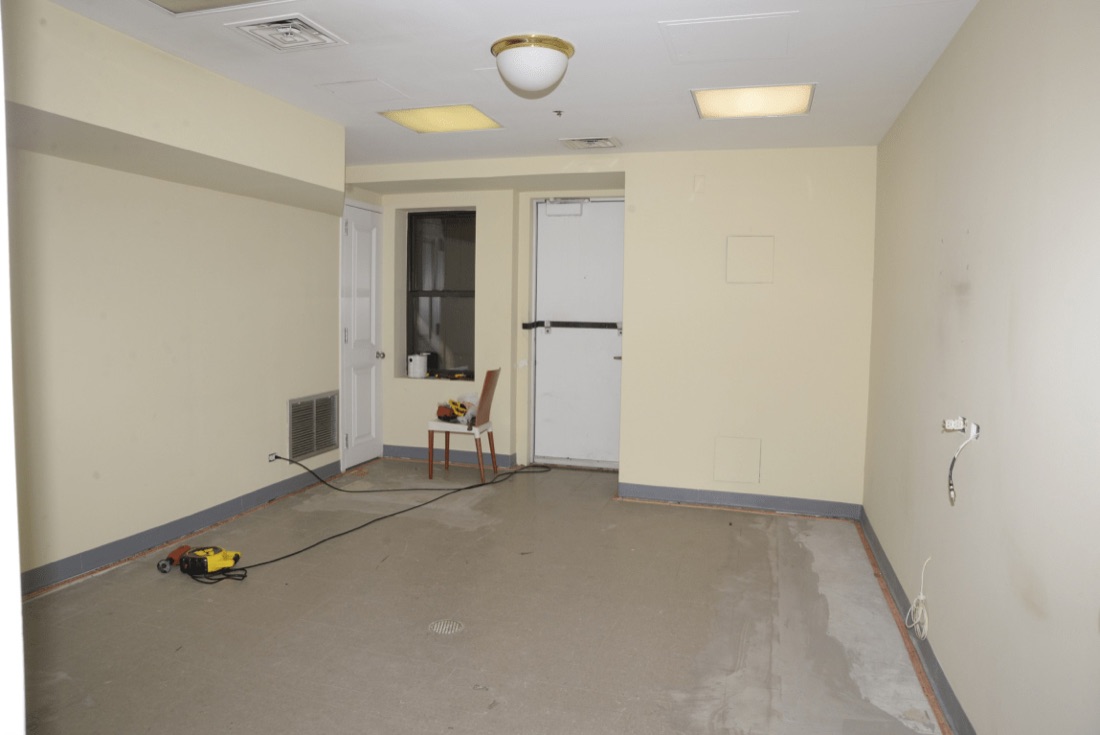
A useful composition check asks whether the reference is helping you discuss a treatment or tempting you to replace the whole room. If the answer is the latter, decide whether that is actually the creative task. For an imagined room, replacement may be acceptable. For a concept tied to an existing property, it may make the picture unusable for the intended discussion.
Criterion three: can you state what to borrow and what to leave?
Write a short reference brief in two parts. First name the visual ideas you want to explore. Then list the source-room features that must not be replaced. If you cannot separate those parts, the reference may still be a mood-board inspiration, but it is not yet a clear brief for a constrained redraw.
For the pictured reference, a proposed borrowing might concern woven lighting, subdued textiles and wood finishes. A proposed boundary might protect the source's rear door and existing wall openings. These examples describe how to formulate a request; they are not instructions we submitted and proved effective during this article.
Remove contradictions before asking someone to review a result. If you request the exact room from the source and also ask for the reference's arched opening, decide which intention matters. A model cannot make an architectural contradiction disappear just because both phrases sound reasonable. We have no tested rule saying that a final sentence or an image always wins.
What the associated historical result can tell us
The existing showcase associates the source and reference with the result below. Woven hanging shades, a sofa and pale material relationships remain recognizable as visual ideas. At the same time, the new picture has a left window treatment and a right arched area that do not preserve the source's rear-door arrangement.
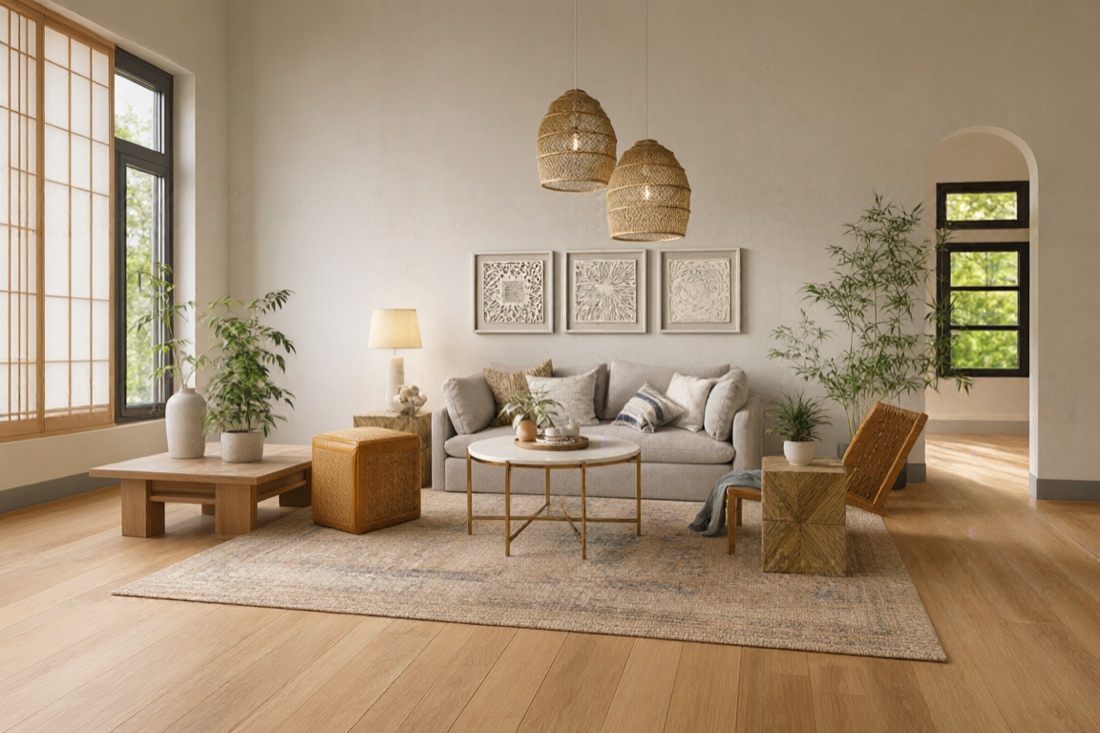
The result lets us point to similarities and differences. It does not isolate their causes. Because we did not run a controlled comparison, we cannot attribute each opening or furniture change to the reference alone, the named preset alone or a particular instruction. Describe the observed image without turning a plausible explanation into an experiment that never happened.
This boundary is useful when selecting references. The question is not whether one image guarantees the right output. It is whether the reference gives you a clear intention and a clear way to recognize an unwanted change. A readable brief remains useful even when the candidate result has to be rejected.
A short selection and review procedure
- Name the decision you want the reference to support: material, palette, lighting or another visible treatment.
- Inspect that cue in the candidate image and reject ambiguity you cannot explain.
- Compare the candidate's scene and viewpoint with your source room; note architectural differences before using it.
- Write what may be borrowed and what must remain from the source. Keep unverified dimensions out of the brief.
- Review any result separately for style direction and source-room preservation. Mark uncertain details rather than approving them by default.
These are suggested human review steps, not new generation settings. We inspected existing pictures for this draft and make no timing, output-size or performance claim about following the procedure. If the desired material is not visible in the reference, a more elaborate instruction does not turn the hidden surface into verified evidence.
Keep the chosen reference with the source and the acceptance notes when handing off a concept. Someone seeing only the output cannot know whether an added arch was requested, borrowed unintentionally or accepted as a compromise. The handover should explain that decision rather than making the next person reconstruct it.
Continue with an explicit room brief
Read the existing two-reference room workflow for the source-and-reference distinction, then use the interior style-conversion tool as the matching entry to the core workflow. The available evidence concerns interiors; this article does not claim to have tested clothing identity or garment fit.
A good interior style reference is one you can explain. It shows the treatment you mean, relates usefully to the source and supports a brief with visible acceptance criteria. That makes it a better basis for a design discussion without pretending that reference selection alone controls the whole generated result.
Disclosure and limits
We operate the linked site independently and are not affiliated with NVIDIA or Black Forest Labs. The external documentation is background, not certification of this workflow. All illustrations are existing site-owned samples, and their reuse here does not create a new inference result.
The source, reference and historical result were visually reviewed for this article. No fresh model run, reference-strength experiment or prompt-priority test was performed. Exact architecture, material specifications and real furniture fit remain outside what these pictures can establish.
Try the free AI image tool · Check the source-linked GPU evidence